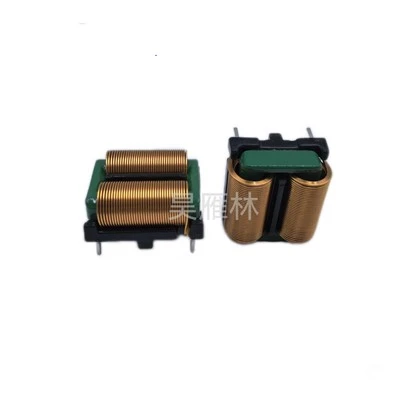
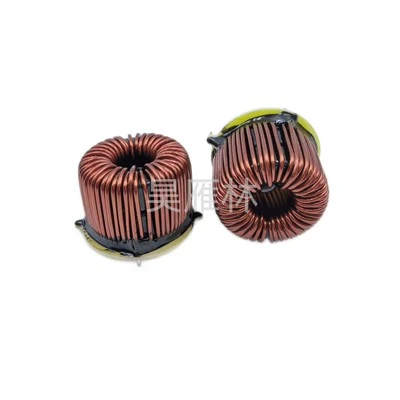
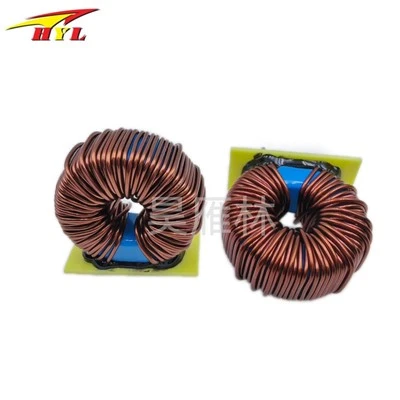
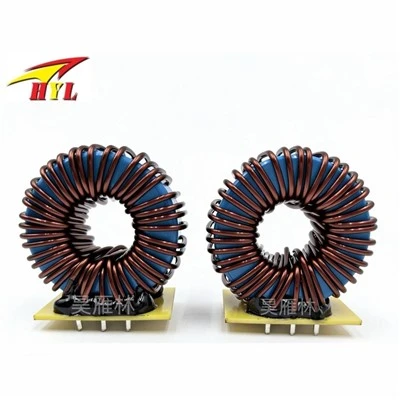
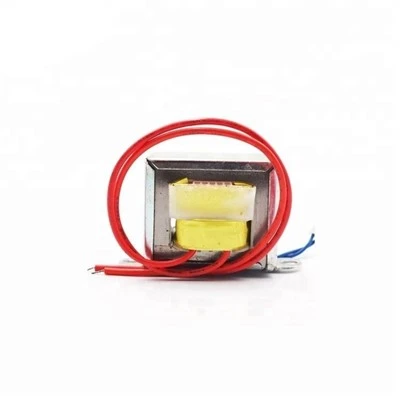
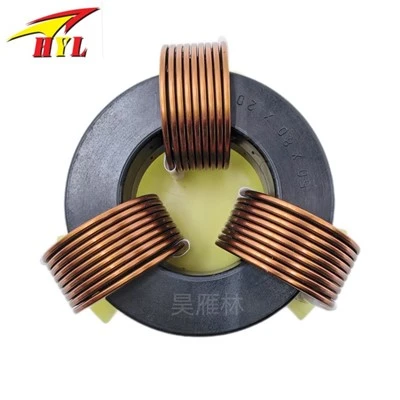
The basic structure of a flat coil inductor consists of a coil section, leads extending from both ends of the coil section, a magnetic base made of die-cast iron powder, and a cover. The coil section is a flat, wound conductive wire, with its leads bent towards the external circuit connection direction. An insulating coating is applied to the outer surface of the coil section and leads, exposing only a portion of the leads as the contact surface for external circuitry. These leads are pre-shaped and fitted together with the coil section into the magnetic base.
Its technical features include the use of flat wire winding, resulting in tight and flat turns, which helps increase the effective cross-sectional area, reduce DC resistance (DCR), and decrease copper losses. The core shape is designed to match the coil to reduce magnetic field leakage and achieve good shielding. The core is die-cast from alloy-based metal powder material, resulting in low magnetic loss, good saturation current characteristics, and an adjustable air gap in the core post to withstand larger current surges. Direct lead-out as solder terminals reduces the risk of open circuits.
The coil is wound with Grade C AIW enameled copper wire, exhibiting solvent resistance, thermal stability, high softening breakdown, radiation resistance, and freeze resistance. The special internal air gap structure of the magnetic core prevents a sudden drop in inductance when the current exceeds the rated range. Surface coating provides excellent insulation. The triangular pad design enhances SMT soldering stability. The base uses thermally conductive pads for bonding, aiding in fixation and heat dissipation, reducing temperature rise. This inductor is suitable for reflow SMT processes, is lead-free, and complies with RoHS directives.