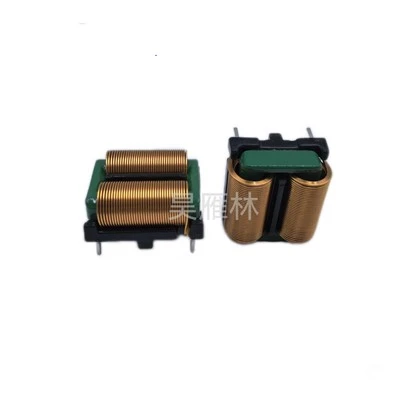
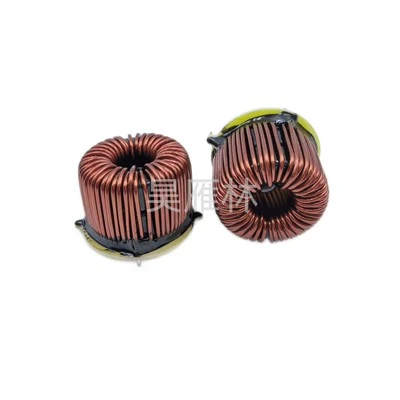
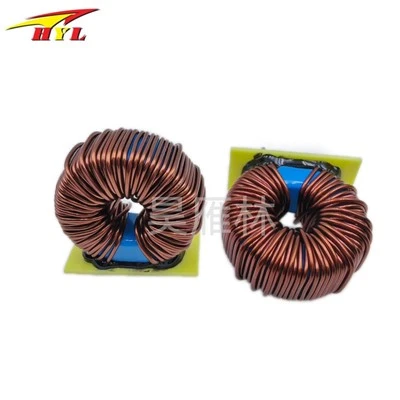
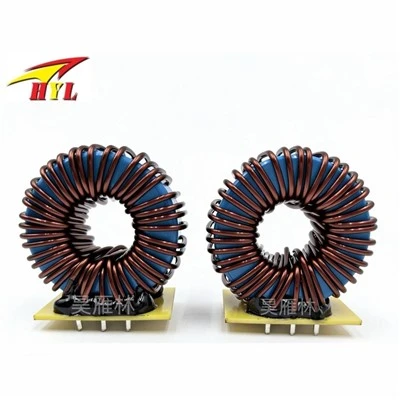
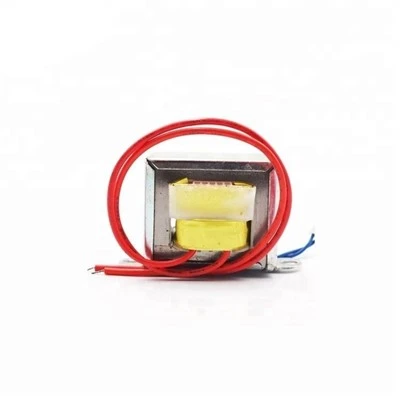
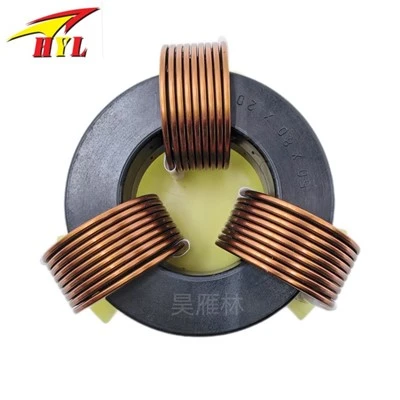
The core characteristic of toroidal coil inductors (magnetic ring inductors) is that their toroidal structure forms an almost completely closed magnetic circuit. This structure results in less magnetic flux leakage, relatively controllable energy loss, low external electromagnetic interference (EMI), strong self-interference capability, and suitability for high-density mounting. It achieves high inductance values within a relatively small volume, exhibiting high inductance density. Ferrite magnetic rings are particularly suitable for high-frequency applications (kHz to GHz range), exhibiting excellent high-frequency characteristics. Their structure is simple and robust. The introduction of a magnetic core significantly improves inductance, reduces leakage flux, and enhances energy transfer efficiency. High inductance-to-DC resistance ratios can be achieved through integrated processes (such as thick copper windings and thick laminated magnetic cores). Patented technologies are continuously improving the winding structure and uniformity to reduce temperature rise and inductance dispersion, demonstrating their potential in compact, high-performance applications.
The winding process of toroidal coil inductors is relatively complex, and automation needs improvement; currently, it relies heavily on manual processing. In terms of shape preference, users tend to prefer square inductors, so in some application scenarios, toroidal inductors are not the most advantageous shape.